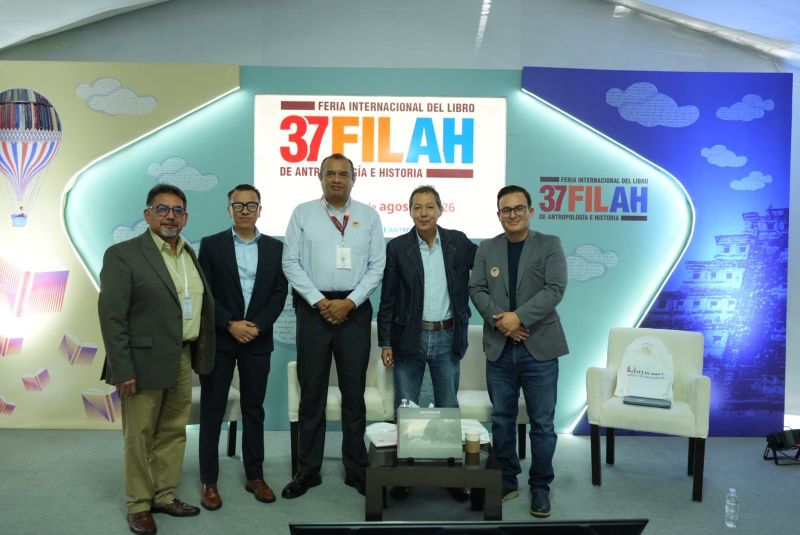
RWHIZ Presents Publication on the Camino Real de Tierra Adentro at the 37th FILAH
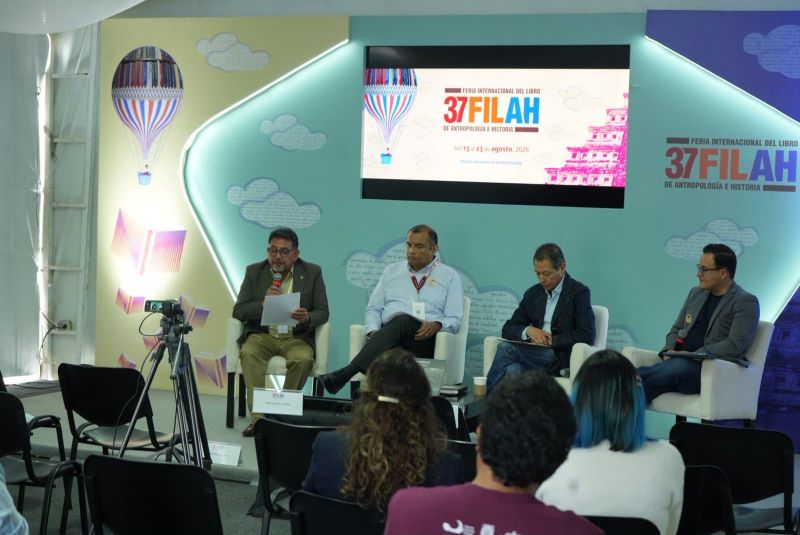
The Regional World Heritage Institute in Zacatecas (RWHIZ), the National Institute of Anthropology and History (INAH), and the "Ramón López Velarde" Zacatecan Institute of Culture (IZC) presented the book Zacatecas, origen y destino del Camino Real de Tierra Adentro (Zacatecas: Origin and Destination of the Camino Real de Tierra Adentro) at the 37th International Anthropology and History Book Fair (FILAH), held at the National Museum of Anthropology in Mexico City.
The publication is the result of an inter-institutional effort aimed at gathering and disseminating knowledge about the Camino Real de Tierra Adentro—specifically its route through the state of Zacatecas. The work was coordinated by Juan Carlos Basabe Bañuelos, Limonar Soto Salazar, and Carlos Alberto Torreblanca Padilla, and compiles contributions from various researchers and specialists.

During the presentation, RWHIZ Director General Carlos Augusto Torres Pérez highlighted the importance of strengthening the foundations for the knowledge, interpretation, and management of this heritage site, which was inscribed on the UNESCO World Heritage List in 2010. Meanwhile, Raúl Pacheco Pérez, Director of the INAH Center in Zacatecas, noted that August 2026 marks the 16th anniversary of this inscription and emphasized Zacatecas's significance within the route, as it contains 13 of the trail's component sites distributed across various municipalities in the state.
As part of the presentation panel, Víctor Hugo Ramírez Lozano—a researcher at the "Ramón López Velarde" Zacatecan Institute of Culture (IZC)—reviewed the Zacatecan components included in the inscription and how they are addressed in the publication. Additionally, José Luis Perea González, Technical Secretary of the National Institute of Anthropology and History (INAH), reflected on the enduring presence of historic routes within territories and communities, as well as the contemporary challenges of integrating their conservation with research, education, and social development.
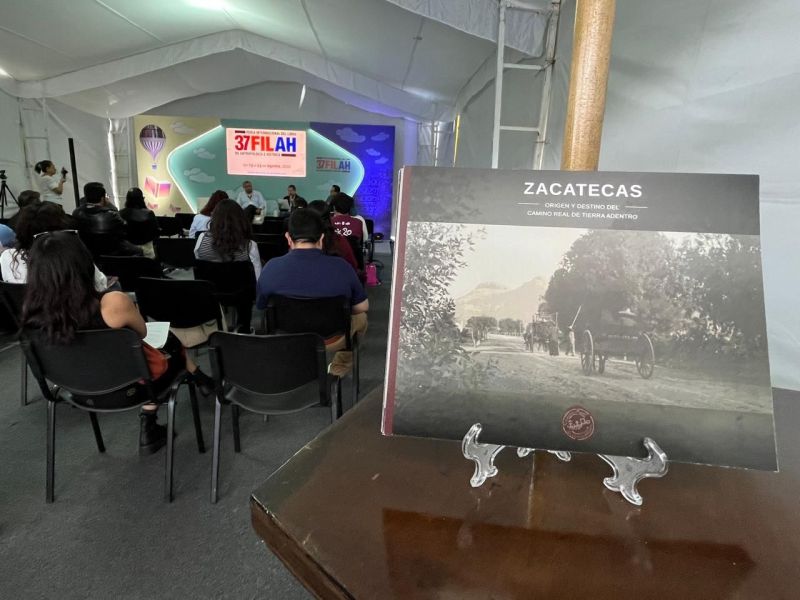
The presentation highlighted the collaboration among the RWHIZ, the INAH, and the IZC to generate and disseminate specialized knowledge regarding World Heritage and to make it accessible to both specialists and the general public.
Zacatecas, origen y destino del Camino Real de Tierra Adentro represents a contribution to the understanding of a historical process that helped shape the Zacatecan territory; at the same time, it serves as a tool to further promote the study, conservation, and appreciation of a heritage site recognized for its Outstanding Universal Value.