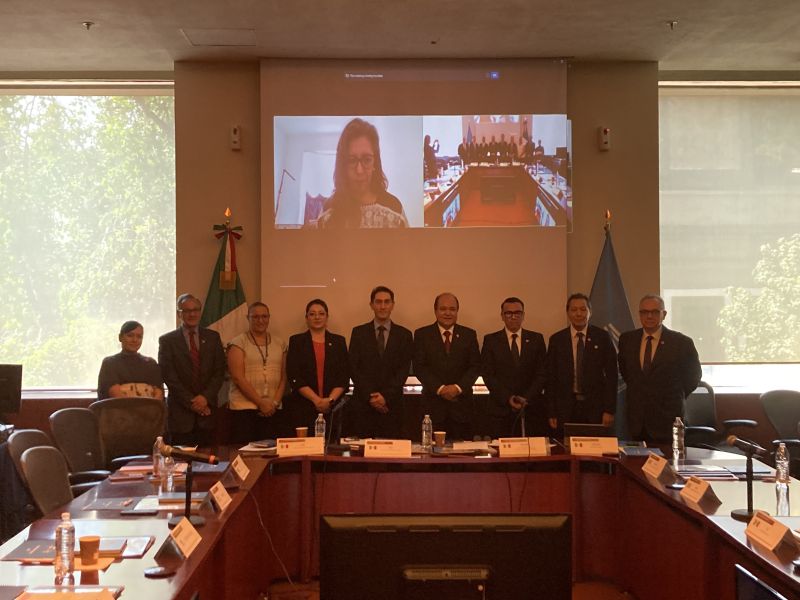
The IRPMZ Board of Directors Holds Its Fifth Ordinary Meeting and Approves the 2026 Work Plan
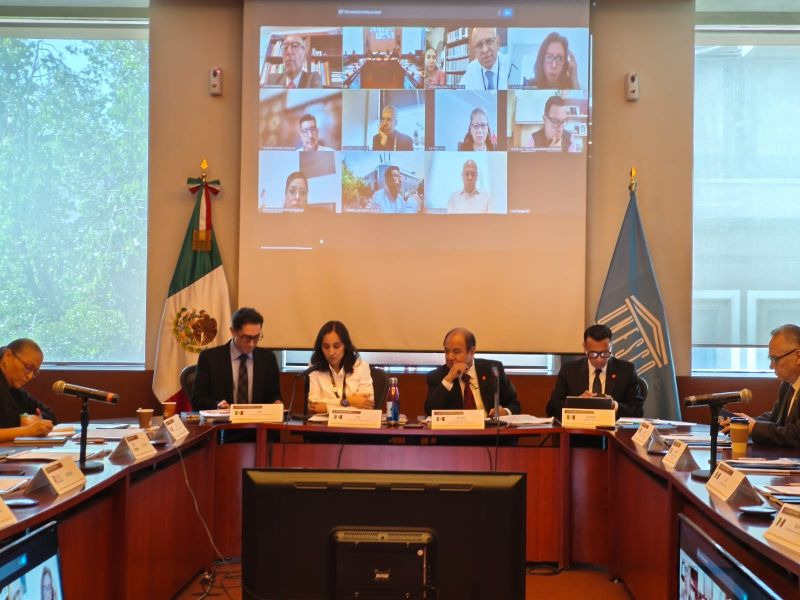
On Friday, March 13, 2026, the Fifth Ordinary Meeting of the Board of Directors of the Regional Institute of World Heritage in Zacatecas (IRPMZ) was held in Mexico City at the facilities of the Ministry of Foreign Affairs. The purpose of the session was to inform the Board of Directors about the activities carried out in 2025 by this Category 2 Center, which operates under the auspices of UNESCO, and to present the 2026 Work Plan.
Those in attendance included Le Roy Barragán Ocampo, representing David Monreal Ávila, Governor of the State of Zacatecas and President of the IRPMZ Board of Directors; Carlos Augusto Torres Pérez, Director General of the IRPMZ; Janeth Esmeralda Martínez Robles and Erika Rentería Ruiz, members of the Institute; Sylvia Paola Mendoza Elgues, Head of the Directorate General for the United Nations at the Ministry of Foreign Affairs; and Mauricio Torres Córdova, Coordinator for Specialized International Organizations of the UN System. Sandra García Loredo, Director of Specialized International Organizations; Gloria Liliana García Gutiérrez, Deputy Director for Specialized International Organizations; Francisco Emanuel Vidargas Acosta, Director of World Heritage at INAH; José Luis Perea González, Technical Secretary of INAH; Gerardo Ramos Olvera, Director of ENCRyM; and Martha Elena Orta Sánchez, of the UNESCO Chair at ENCRyM.
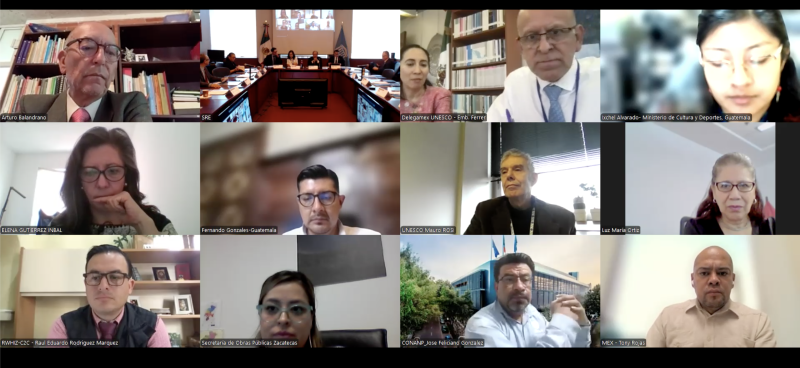
Participants via remotely included Azucena Sahagún Segoviano, Director of Multilateral Treaties at the Legal Counsel's Office of the Ministry of Foreign Affairs; Samara Padrón Sánchez, Head of the Department of Institutional Strengthening of Local Governments; Tony Argelio Rojas Gil, Director of Information Systems at AMEXCID; José Iván Benítez Ramos, Deputy Director of Monitoring and Evaluation at AMEXCID; Arturo Balandrano Campos, Director General of Sites and Monuments of Cultural Heritage at the Ministry of Culture; Verónica Guerrero Huepa, Deputy Director of Cooperation and Multilateral Relations at the Ministry of Public Education; Elena Gutiérrez Medina, from the Deputy Directorate General of Immovable Artistic Heritage at INBAL; José Feliciano González Jiménez, Director General of Institutional Strengthening and International Affairs at the National Commission of Natural Protected Areas; and Luz María Ortiz Ortiz, Coordinator of Multilateral Environmental Agreements at SEMARNAT. Paola Zapata de Santiago, Undersecretary of Projects and Costs of the Secretariat of Public Works of Zacatecas; Karla Maribel Girón Correa, of the Secretariat of Education of the State of Zacatecas; Uriel Márquez Romo, State Director of Museums of the Zacatecan Institute of Culture “Ramón López Velarde”; and Raúl E. Rodríguez Márquez, specialist and head of Training, Editorial Coordination and International Linkage of the IRPMZ.
Representing the States Parties and the international community were Samuel Esteban Peña Valdez, First Secretary of the Embassy of the Dominican Republic; María Isabel Osorio Amado, Attaché for International Cooperation and Education at the Embassy of Panama; and the Guatemalan delegation, comprised of Laura Jazmín Cotí Lux, Vice Minister of Cultural and Natural Heritage; Reyna Ixchel Alvarado Ávila, from the Guatemalan World Heritage Delegation; Diana María Benavente Benavente, Director of International Cooperation; and Luis Fernando González, Advisor to the Vice Minister of Cultural and Natural Heritage.
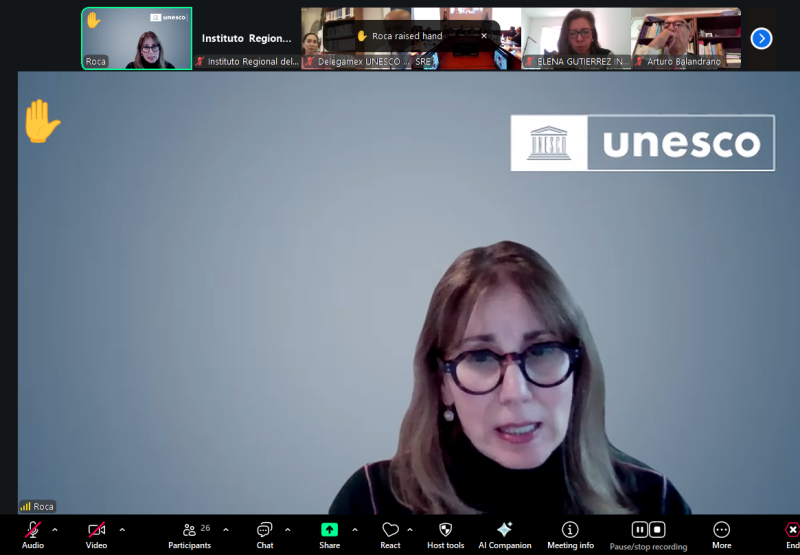
Representing UNESCO were Mauro Rosi, Head of the Latin America and Caribbean Unit at the World Heritage Centre, and Rochelle Roca-Hachem, Program Specialist at the same Unit. Also participating were Juan Antonio Ferrer, Permanent Representative of Mexico to UNESCO, and Susana Garduño, from the Permanent Mission of Mexico to UNESCO.
At the meeting, Carlos Augusto Torres Pérez presented the 2025 Report of the Category 2 Center, highlighting actions taken to strengthen capacities, consolidate regional cooperation initiatives, organize the 9th Coordination Meeting of Category 2 Centers related to World Heritage, and develop digital and institutional outreach tools that expanded the Institute's reach in Latin America and the Caribbean.
Raúl E. Rodríguez Márquez also presented the current status of the renewal process for the Institute's Tripartite Agreement, addressing the background, progress, outstanding issues, and prospects for the continuity of the international legal framework that underpins the Center.
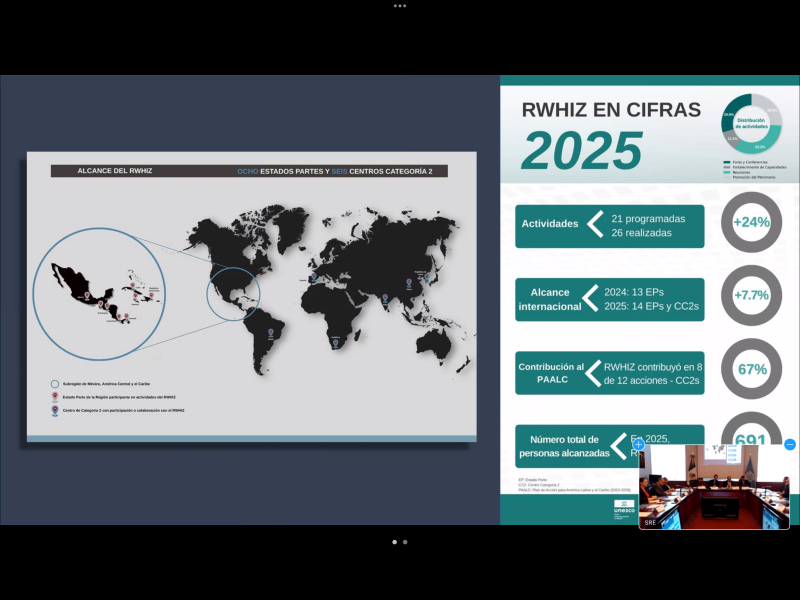
Similarly, the proposed 2026 Work Plan was presented, comprising 24 actions aimed at continuing the priorities of the Action Plan for Latin America and the Caribbean (2023-2029) and the objectives of the Category 2 Center. These actions include new specialized training initiatives, strengthening regional collaboration networks, promoting digital tools applied to heritage, and consolidating strategic alliances.
In their general comments, participants acknowledged the progress made by the IRPMZ during 2025 and approved the 24 actions included in the 2026 Work Plan. They highlighted the contributions of Rochelle Roca-Hachem, Program Specialist at the UNESCO World Heritage Centre; the delegation from Guatemala; and Le Roy Barragán Ocampo, representative of the Governor of the State of Zacatecas, who, before closing the meeting, reiterated the importance of continuing to strengthen the work of the Category 2 Center, emphasizing its role as a regional platform for cooperation on world heritage.