

They formalize an agreement to promote the use of Digital Technologies in the Registry of Cultural Assets Associated with World Heritage in Mexico, Central America and the Caribbean
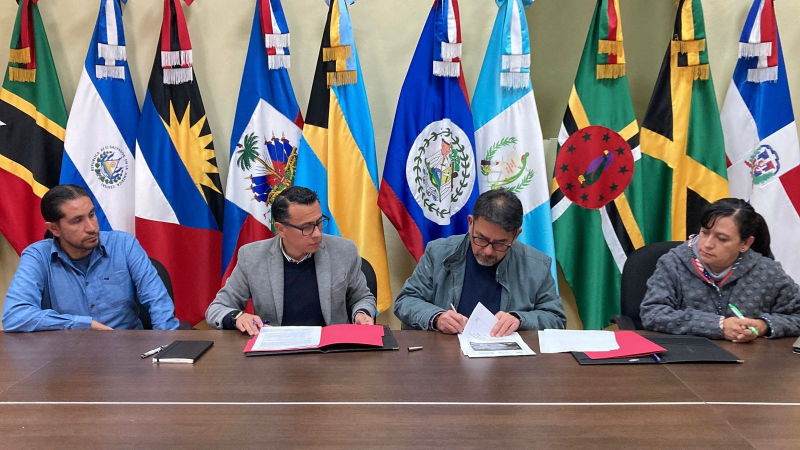
On December 5th, the Regional World Heritage Institute in Zacatecas, a Category 2 Center under the auspices of UNESCO (RWHIZ – CC2 UNESCO), and the National Institute of Anthropology and History (INAH), through its Zacatecas Center, formalized a collaboration agreement to promote the second phase of the Training Program for the Use of Digital Technologies Applied to Cultural Heritage in Mexico, Central America, and the Caribbean.
The event was led by Carlos Augusto Torres Pérez, director of RWHIZ – CC2 UNESCO; Érika Rentería Ruíz, technical secretary of the same Institute; Raúl Pacheco Pérez, director of the INAH Zacatecas Center; and the course instructors, Jorge Cuauhtémoc Martínez Huerta and Juan Carlos Basabe Bañuelos, experts from INAH.
The Agreement, whose main objective is to contribute to strengthening capacities in the region through the training of specialists in 3D documentation of cultural heritage for its application to immovable properties at sites inscribed on the UNESCO World Heritage List, considers the pooling of efforts, resources, and capabilities to carry out a training program in the use of digital photogrammetry as a tool for recording cultural heritage.
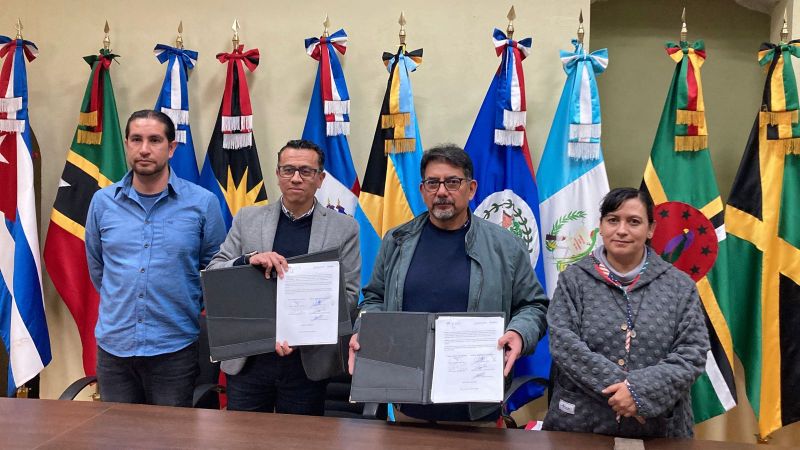
The courses that make up the program, which will be offered in both online and in-person formats, focus on generating knowledge and skills in photogrammetric techniques using unmanned aerial vehicles (drones). They will be primarily aimed at site managers, specialists, and professionals involved in the management and conservation of World Heritage sites in the region. Therefore, the activities will be carried out in various states of Mexico, as well as in countries in Central America and the Caribbean, during 2026 and 2027.
This collaborative effort, which will include various Ministries of Culture and National Heritage Directorates, will significantly contribute to further strengthening the processes of registering and digitizing World Heritage sites, especially given the constant threats of deterioration and destruction they face.
With this initiative, the RWHIZ - CC2 UNESCO reaffirms its commitment to strengthening capacities for the protection of World Heritage in the region.